
The pervasive issue of cheating casts a long shadow across numerous sectors. Startling statistics reveal that over 40% of students admit to academic dishonesty, and fraud impacts businesses globally, costing billions annually. Traditional methods of preventing such deception often fall short, prompting those affected to seek more innovative solutions.
Blockchain technology emerges as a revolutionary force, offering new possibilities for establishing trust and accountability. Its intrinsic characteristics—transparency, security, and immutability—make it an appealing antidote to fraud and manipulation. While initially recognized for its use in cryptocurrencies, the potential applications of blockchain extend far beyond digital finance. From verifying academic credentials to securing supply chains and ensuring fair elections, the distributed ledger technology has many use cases.
This article breaks down the realities of blockchain’s deployment as a solution against cheating, examining its strengths, limitations, and real-world implementations. It serves as a guide for understanding how this technology could reshape integrity across multiple domains.
Understanding Blockchain Fundamentals
The Core Principles: Blocks, Hashes, and Consensus
At its heart, a blockchain is a digital ledger that’s virtually tamper-proof, offering security against manipulation. Think of it as a shared, continuously updated record book where everyone has a copy. This is achieved through three core principles: blocks, hashes, and consensus. Imagine a train where each carriage is a block. Each block contains pieces of information – transaction details, data records, or even votes in an election. Once a block is full, it’s chained to the previous one, forming a continuous, unalterable chain.
Each block also contains a unique fingerprint called a “hash.” A hash is like a digital signature; if anything within the block changes, the hash changes too. This is one of the main aspect to guarantee immutability. The previous block’s hash is also included in the current block, linking them together. This creates a chain of dependencies: if someone tries to tamper with a block, its hash changes, and that change cascades down the chain, immediately revealing the manipulation.
But how do we ensure everyone agrees on which blocks are valid and should be added to the chain? That’s where consensus algorithms come in. Protocols like “Proof-of-Work” (used by Bitcoin) and “Proof-of-Stake” (used by other blockchains) provide mechanisms for validating transactions and adding new blocks. This mechanism prevents anyone from adding fraudulent blocks. Consensus creates inherent trust in the system, as every transaction is verified by multiple participants.
How Blockchain Can Combat Cheating
Securing Academic Credentials
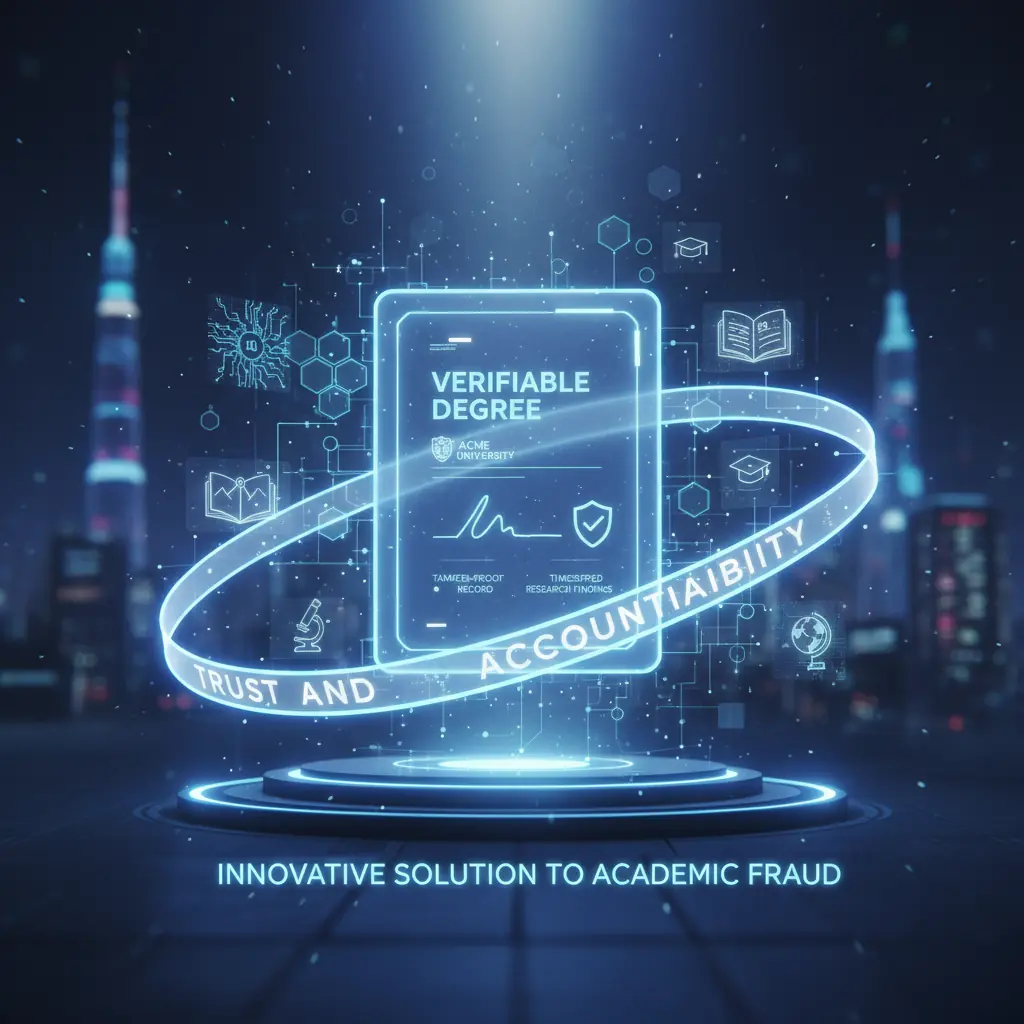
Blockchain technology offers a revolutionary approach to securing academic credentials. By issuing degrees and transcripts on a blockchain, educational institutions can create tamper-proof records that are easily verifiable. Each credential receives a unique digital signature, ensuring its authenticity and preventing fraud. Employers or other institutions can then quickly and reliably verify a candidate’s educational background, eliminating the need for cumbersome traditional verification processes. Some universities have already started implementing blockchain-based credentialing systems, paving the way for a more secure and transparent education landscape. This helps to ensure that individuals can’t claim false credentials and misrepresent their education history. Blockchain establishes trust in academic achievements.
Protecting Intellectual Property and Research
The integrity of research and intellectual property is paramount, and blockchain technology provides robust tools for its protection. Researchers can use blockchain to create a timestamped, immutable record of their findings, establishing clear proof of ownership and priority. This is particularly valuable in fields where ideas are vulnerable to being stolen. Securing intellectual property on a blockchain facilitates easier licensing, streamlines the process of proving ownership, and acts as a strong deterrent against plagiarism. Imagine a researcher securing a patent application with blockchain, creating a permanent and unalterable record of its creation and submission. This eliminates disputes and establishes a transparent framework for protecting intellectual assets.
Blockchain’s decentralized and transparent nature makes it an effective tool against various forms of cheating. By leveraging its capabilities, systems can ensure the integrity of credentials, protect intellectual property, and establish a more reliable system for education. With blockchain, academic fraud and corruption risks are minimized.
Real-World Applications and Case Studies
Organizations across various sectors are increasingly turning to blockchain technology to combat fraud and ensure integrity. Here are a few compelling examples that demonstrate the real-world potential of blockchain in preventing cheating and misrepresentation.
Case Study 1: University Degree Verification System
One innovative approach is exemplified by a forward-thinking institution, “Horizon University” (name anonymized for privacy). Faced with rising concerns about degree fraud, Horizon University implemented a blockchain-based degree verification system. Each graduate’s degree information, including name, degree title, and graduation date, is securely recorded on a private, permissioned blockchain. This allows employers and other institutions to instantly and securely verify the authenticity of a degree without needing to contact the university directly. The implementation dramatically reduced administrative overhead and eliminated the possibility of fraudulent degree claims. The university reported a 70% reduction in verification requests handled by staff, freeing up resources for other critical tasks.
Case Study 2: Blockchain to Avoid Fraud
A global pharmaceutical company (“PharmaTrust,” a pseudonym) tackled the pervasive issue of counterfeit drugs using blockchain. Counterfeit drugs pose a significant threat to public health and erode consumer trust. PharmaTrust implemented a blockchain-based supply chain tracking system. Every step of the drug’s journey, from manufacturing to distribution, is recorded on the blockchain, creating an immutable record of its provenance. This allows consumers and regulators to verify the authenticity of a medication by scanning a QR code on the packaging, which links to the drug’s complete history on the blockchain. Since implementation, PharmaTrust has seen a 40% decrease in reported incidents of counterfeit drugs within their supply chain, significantly improving patient safety and brand reputation.
Limitations and Challenges
While blockchain offers a compelling approach to combating cheating, it’s crucial to acknowledge its limitations and the challenges associated with its implementation. Blockchain is not a silver bullet, and a realistic understanding of its capabilities is essential for effective deployment.
One significant challenge is scalability. Many blockchain networks struggle to handle high transaction volumes, which could be problematic in scenarios involving a large number of participants or frequent activity. The cost associated with blockchain implementation can also be a barrier. Developing and maintaining a blockchain-based system requires specialized expertise and infrastructure, which can be expensive.
Complexity is another factor to consider. Designing and implementing a secure and reliable blockchain solution requires careful planning and execution. Additionally, the regulatory landscape surrounding blockchain is still evolving, and organizations must navigate potential legal and compliance hurdles.
Despite its strengths, blockchain is not foolproof in preventing all forms of cheating. For instance, if the data entered into the blockchain is inaccurate to begin with (“garbage in, garbage out”), the blockchain will simply record and immutably store that inaccurate information. Therefore, blockchain solutions often need to be combined with other security measures and validation processes to ensure data integrity. Hybrid models, which leverage the strengths of blockchain alongside traditional security approaches, are often the most effective way to address the multifaceted challenge of cheating.

The Future: Blockchain, AI, and Hybrid Solutions
The future of anti-cheating measures is likely to be shaped by the innovative integration of blockchain technology with other cutting-edge solutions, particularly artificial intelligence (AI). Combining these technologies can lead to more effective and robust systems that are capable of identifying and preventing fraudulent activities with greater accuracy and speed.
One of the most promising avenues is the use of AI to enhance blockchain security. AI algorithms, including machine learning models, can be trained to detect patterns indicative of cheating or corruption within blockchain networks. For example, AI can analyze transaction data to identify anomalies or suspicious behaviors that might be missed by traditional methods. This proactive approach can help to flag potential issues before they escalate, ensuring the integrity of the system.
Furthermore, AI can significantly improve the efficiency of anti-corruption systems. By automating the analysis of large datasets, AI can quickly identify potential risks. This allows investigators to focus their efforts on the most critical cases, optimizing resource allocation and maximizing the impact of anti-corruption initiatives.
Hybrid solutions, which combine the strengths of both blockchain and AI, offer a powerful approach to combating cheating and corruption. These systems can leverage the transparency and immutability of blockchain to provide a secure and auditable record of data, while also using the analytical capabilities of AI to detect and prevent fraud. The synergy between these technologies has the potential to transform the landscape of anti-cheating measures, creating a more transparent, secure, and equitable environment.
Implementation Considerations and Best Practices
Implementing a blockchain-based anti-cheating system requires careful planning and execution. Here’s a step-by-step guide to ensure a smooth and effective implementation:
- Define Clear Objectives: Clearly outline the specific cheating behaviors the system aims to prevent.
- Choose the Right Blockchain: Select a blockchain platform that aligns with your needs. Consider factors like scalability, security, and cost.
- Address Data Privacy: Implement robust measures to protect sensitive student data. Comply with all applicable data privacy regulations.
- Ensure Security: Prioritize the security of the blockchain and related systems. Conduct regular security audits to identify and address vulnerabilities.
- Develop a Governance Model: Establish clear rules and procedures for managing the blockchain and resolving disputes.
- Provide Training: Train faculty, staff, and students on how the system works and their roles in maintaining its integrity.
Best Practices:
- Regularly review and update the system to address emerging cheating techniques.
- Involve stakeholders from across the organization in the implementation process.
- Monitor the system’s performance and make adjustments as needed.
Conclusion
Blockchain technology presents a compelling, albeit complex, solution to the pervasive problem of cheating across various sectors. Its inherent transparency and immutability offer a potent deterrent, verifiable credentials and secure voting systems. However, widespread adoption faces challenges, including scalability issues, regulatory uncertainties, and the energy-intensive nature of some blockchain implementations.
Despite these hurdles, the potential of blockchain to revolutionize trust and accountability remains immense. As technology evolves and awareness grows, exploring the applications of blockchain could pave the way for a fairer and more honest future.